
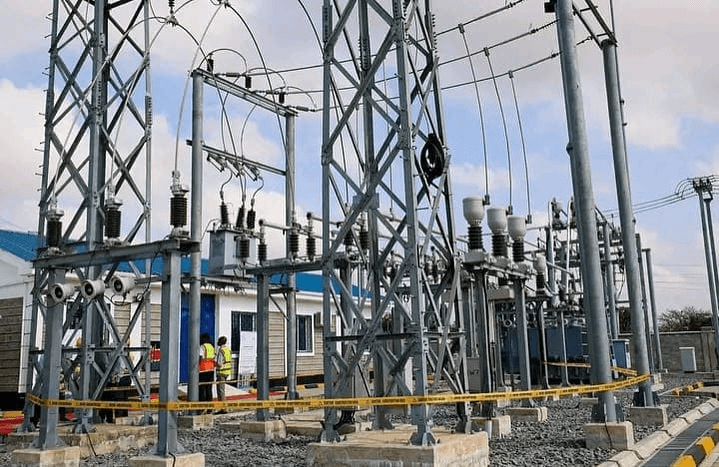
Across much of sub-Saharan Africa, power system failures are rarely sudden events. Observable technical and operational signals often precede these failures, yet limited system visibility and monitoring capacity prevent timely detection and response. Consequently, emerging risks are allowed to escalate until service disruptions, equipment damage, or financial losses occur. Non-technical losses such as electricity theft, faulty meters, and undocumented connections remain largely invisible in many East and West African utilities. The absence of advanced metering infrastructure and real-time substation or feeder-level monitoring means such losses are frequently identified only during end-of-month financial reconciliation or after equipment failure caused by unrecorded overloads. At that stage, utilities have already incurred revenue losses, accelerated asset degradation, and disruptions to customer supply.
This pattern extends beyond African power systems, with other regions distinguished by earlier recognition that operational visibility is fundamental to reliability, efficiency, and long-term system resilience.
When Growth Outpaces Visibility
In South Australia, renewable energy expanded rapidly as wind and solar installations surged ahead of grid monitoring capabilities. A critical blind spot developed around behind-the-meter rooftop solar, rendering system operators unable to observe it in real time . South Australian operational demand in the middle of the day was projected to continue to decrease as distributed PV levels increase, potentially reaching zero by late 2022. As a consequence, instability was detected only after it had already begun, when frequency deviations were observed rather than anticipated.
To prevent blackouts, operators were forced to take emergency actions, such as curtailing renewable generation at short notice and deploying large battery systems after the fact to provide fast frequency support. These batteries were installed to compensate for grid behavior that had not been visible or manageable beforehand, making the response reactive rather than preventive.
Similarly, in Texas, particularly in West Texas, large-scale wind generation was developed to supply low-cost electricity to distant demand centers such as Dallas and Houston. While transmission infrastructure existed without dynamic line rating (DLR) or real-time congestion visibility . In the absence of DLR and continuous monitoring of conductor temperature, ambient conditions, and loading, operators relied on conservative static transmission limits designed to reflect worst-case scenarios rather than prevailing conditions.
This invisible constraint led to widespread curtailment and congestion charges that only became apparent months later when consumers saw electricity bills spike. The grid was technically functional, but economically inefficient because it was being operated blindly.
The cost of Reactive planning
Germany demonstrates how localized visibility gaps and delayed network reinforcement can scale into national-level cost burdens. Wind expansion in the north has frequently outpaced transmission reinforcement toward industrial demand centers in the south, increasing reliance on congestion-management tools such as redispatch and related interventions. Reported congestion management and balancing costs have reached the order of billions of euros recently , underscoring the fiscal consequences of managing constraints after the fact rather than anticipating them through integrated, system-wide planning visibility.
California highlights the safety dimension of limited visibility under climate stress. Extreme wind events elevate the likelihood of conductor contact, equipment damage, and starting fires . Today, real-time sensors allow utilities to model line behavior under stress and proactively de-energize sections of the grid before disaster strikes. The shift from reaction to prevention has saved lives, ecosystems, and billions in liability.
The consequences of Africa learning after failure
For African power systems, the stakes are higher and the margins thinner. Utilities operate under tighter financial constraints, growing demand, and increasing pressure to integrate renewables quickly. Learning about losses, congestion, or instability only after they occur is inefficient. It is destabilizing.
This is where digital twins fundamentally change the equation.
Digital twins fundamentally alter this dynamic. A grid digital twin is not a static planning model but a continuously updated representation of the power system that integrates data from substations, feeders, meters, and relevant exogenous drivers such as weather and demand patterns. Through simulation and forecasting, digital twins enable utilities to evaluate system behavior under varying conditions, identify emerging risks, and test interventions before failures occur.
In contexts where non-technical losses remain hidden, a digital twin can flag abnormal load patterns before transformers fail. Where renewable integration threatens stability, it can simulate inertia loss and forecast curtailment risk. Where transmission or distribution constraints loom, congestion pathways can be revealed with sufficient lead time to guide reinforcement, operational reconfiguration, and investment decisions.
Toward predictive grid operations
The experiences of South Australia, Texas, Germany, and California do not reflect systemic failure, but rather the measurable costs of learning late. African utilities can avoid this premium by embedding visibility, forecasting, and simulation into everyday operations. Early stress detection enables the management of risks before they escalate into outages, financial losses, or political disruption, thereby promoting system growth without jeopardizing stability.
Bayes Digital Twin
Bayes Consulting is working to close this gap in Kenya, Uganda, and Tanzania. Through the deployment of grid digital twins , Bayes is helping utilities move from retrospective reporting to predictive operations. By integrating feeder-level data, substation monitoring, demand forecasting, and system simulations, these digital twins provide operators with early insight into emerging grid stress.
The resulting improvements include faster identification of non-technical losses, clearer diagnosis of congestion and curtailment risk, and stronger evidence for procurement, reinforcement, and renewable integration decisions. Rather than learning through outages, billing shocks, or equipment damage, utilities gain the ability to anticipate stress and intervene while corrective action remains feasible. This shift from reactive management to predictive control is central to enabling fast-growing power systems to scale without breaking.
Reviewed by Howard Piwang, Technical Energy Lead