
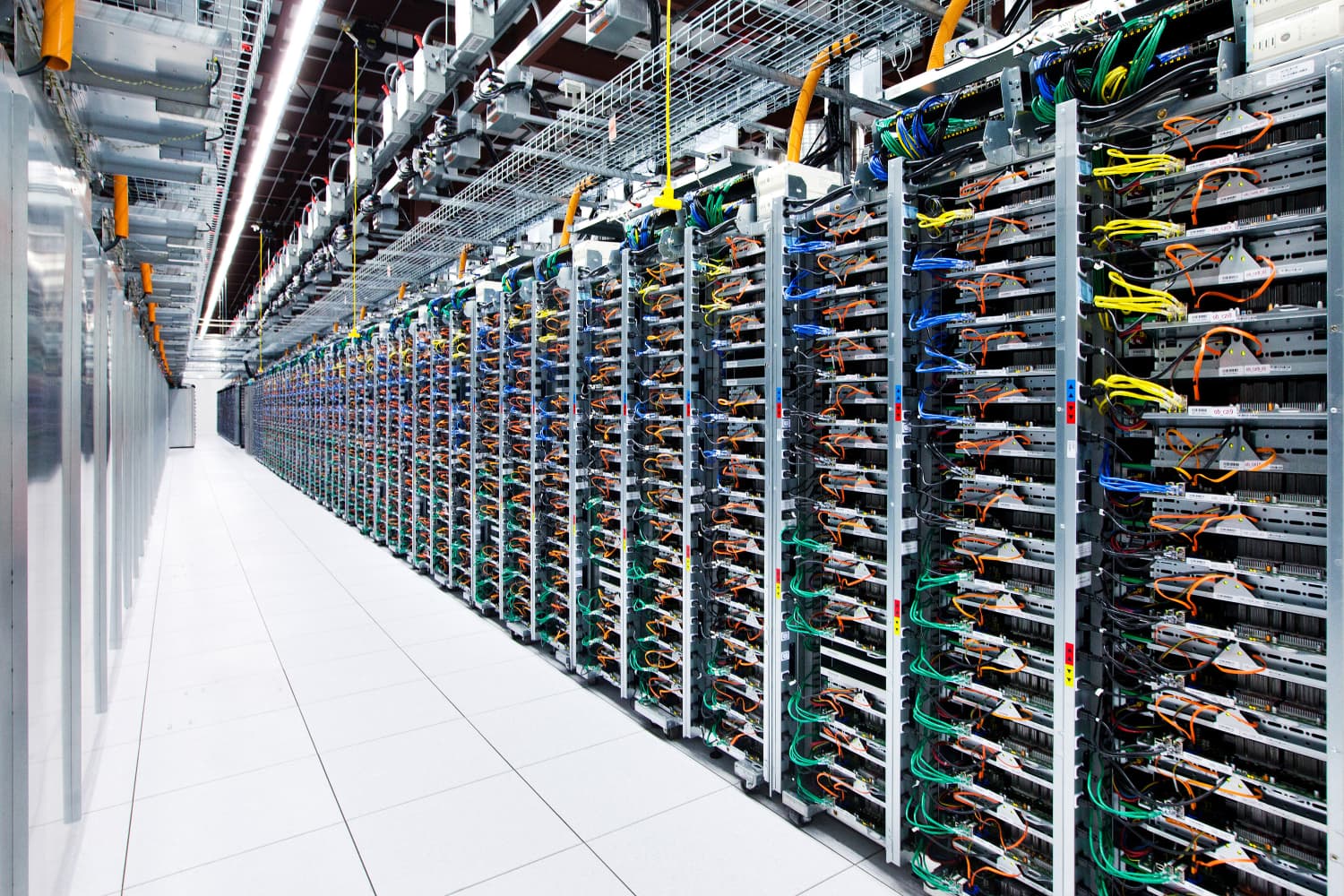
As global demand for artificial intelligence accelerates, data centres have become the invisible engines powering modern economies. Across the world, hyperscalers are racing to deploy gigawatts of capacity to support AI training, inference, and digital services.
But when this conversation reaches Africa, it raises a far more complex and urgent question:
How does Africa pursue data centres and AI growth while still facing a deep energy access gap?
This was the central theme of a recent episode of Conversations at the Kaya, where experts from Bayes Consulting and partners unpacked what data centres really mean for Africa’s energy systems, economies, and digital future.
Africa’s Energy Reality: The Context Often Missing
In 2023, Africa generated approximately 950 terawatt-hours of electricity. By comparison, global data centres already consume an estimated 415 terawatt-hours annually, nearly half of Africa’s total power production. At the same time, over 600 million Africans still lack access to electricity. This reality creates a tension that cannot be ignored. While other regions debate how fast to scale hyperscale data centres, many African countries are still working to meet basic household energy needs. The question is not whether Africa should participate in the AI and data economy, but how it can do so without competing with essential development priorities.
Why Data Centres Still Matter for Africa
Despite these challenges, data centres are not optional if Africa wants to remain economically competitive. Modern economies increasingly rely on AI-driven systems for finance, health, agriculture, logistics, and governance. These systems demand enormous computing power. Where that compute is hosted determines who captures the economic value. Today, much of Africa’s AI workloads are processed in data centres located in Europe and North America. This means African organisations are effectively exporting value, paying for compute elsewhere while generating data locally. This brings the issue of data sovereignty into sharp focus. Data has become a form of currency. Without local infrastructure, African countries risk losing control over how their data is stored, processed, monetised, and protected.
The Capital Constraint: Why Copying Hyperscalers Won’t Work
Africa cannot win the AI race by copying the capital-intensive hyperscale model used in the US and China. Currently, around 45% of global data centre capacity sits in the US, with China close behind. These markets benefit from massive capital pools, short deployment cycles, and constant hardware renewal. Competing on those terms would be a losing battle. Instead, we can adopt an African-first strategy, one that leverages existing strengths rather than trying to outspend global giants.
Edge Computing and Distributed Systems: Africa’s Opportunity
Rather than centralised mega data centres, edge computing and distributed compute offer a promising path forward. Edge computing allows AI models and workloads to run closer to users, on smaller, decentralised infrastructure. This approach reduces latency, lowers energy demand, and improves resilience, especially in regions with weak or unreliable grids. Africa has successfully leapfrogged before. Mobile money is a powerful example. With limited banking infrastructure, the continent adopted mobile-first financial systems faster than many wealthier regions.
The same logic applies to AI.
With millions of Africans accessing the internet primarily through mobile devices, smaller language models, local inference, and edge-based AI systems could unlock enormous value without requiring hyperscale infrastructure.
Reusing Hardware and Anchoring Energy Systems
Another compelling idea is the reuse of decommissioned data centre hardware. As global firms constantly upgrade GPUs and servers, older but still functional equipment can be repurposed for smaller workloads in emerging markets. When paired with mini-grids, data centres or compute hubs can also act as anchor loads, improving the economics of decentralised energy systems. Rather than competing with energy access goals, well-designed data infrastructure can actually support grid expansion and reliability by providing predictable demand. This model has already shown promise in parts of East and Central Africa, where mini-grids support both community needs and productive uses of energy.
AI, Agriculture, and Federated Learning
Distributed systems enable innovation beyond infrastructure. In sectors like agriculture, decentralised data collection through sensors, cameras, and mobile devices allows communities to generate valuable datasets locally. Using approaches such as federated learning, models can be trained across many devices without centralising data. This reduces energy requirements, improves privacy, and aligns well with Africa’s distributed realities.
Rethinking the Future of Data Centres in Africa
Rather than avoiding data centers, Africa must redefine what data centres look like. The future is likely to be:
• Smaller rather than massive
• Distributed rather than decentralised
• Integrated with mini-grids and local energy systems
• Focused on edge computing and local inference
• Designed to support data sovereignty and economic inclusion
If Africa captures even 10% of the projected value of global AI adoption, it could add an estimated $1.5 trillion to GDP. Achieving this will require innovation not just in technology, but in energy systems, business models, and policy.
A Different Path, Built for Africa
Africa does not need to replicate Silicon Valley to build a digital future. By embracing decentralised infrastructure, edge computing, and energy-smart data systems, the continent has an opportunity to chart its own path, one that balances innovation with inclusion.
By Bayes Consulting